

Elavon Salesforce integration challenges
- Setting up a manual Elavon Salesforce integration demands significant effort from your team. You handle the setup, manage every configuration change, and future updates.
- Network errors, out-of-order events, or API changes can trigger duplicate or failed transactions. Without built-in validation, your team is left manually tracking down what was lost or mismatched.
- Update on either of the platforms can risk breaking your custom integration.
- Payment data lives in Elavon, while customer records and sales activity live in Salesforce. Your teams work from two disconnected systems with no unified view.
- Without a shared data layer, finance and sales teams run separate reports and reconcile manually. This process takes a lot of time and is prone to errors.
- Your teams constantly switch between Salesforce and Elavon dashboards to manage transactions, breaking workflow continuity and slowing down daily operations.
With ChargeOn, all these challenges are eliminated!
How does ChargeOn resolve Elavon Salesforce integration challenges?
ChargeOn is a 100% Salesforce native payment processor and orchestration tool. It offers a centralized view of all your payments in Salesforce, bringing data from Elavon and Salesforce together.
ChargeOn provides prebuilt flows for one-time and recurring payments, reminders, retries, and payment links. Additionally, it offers tokenization, PCI DSS-compliant processing, and secure data flows with a failover backup mechanism.
Step-by-step Elavon Integration with Salesforce using ChargeOn
This guide helps you in:
- Assigning appropriate permissions to relevant users
- Configure and set up ChargeOn
Note: Screenshots and details may differ based on your gateway version.
Create an Elavon Sandbox Account
You would require test credentials to proceed with the account. If not available, you need to create an Elavon sandbox account
The following are the steps for the same:
Step 1. Create Account/Log in to Account
- Sign up for the Account using this link
- Fill in the relevant details and click Create Account
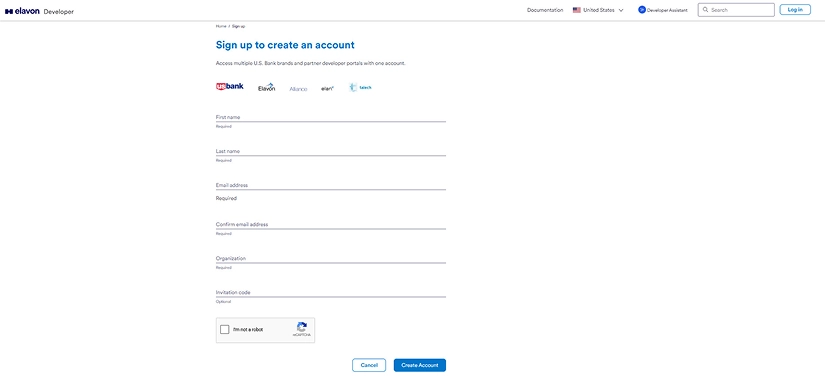
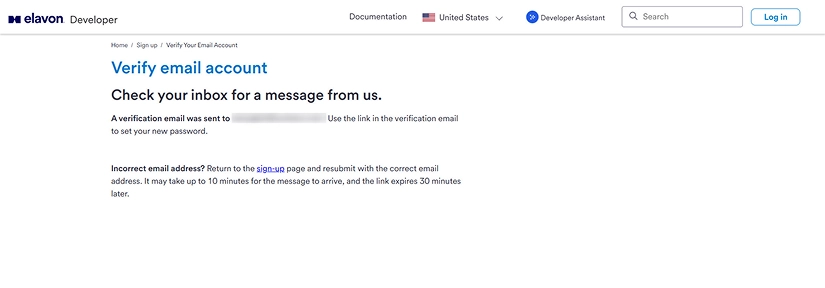
Step 2. Verify your email
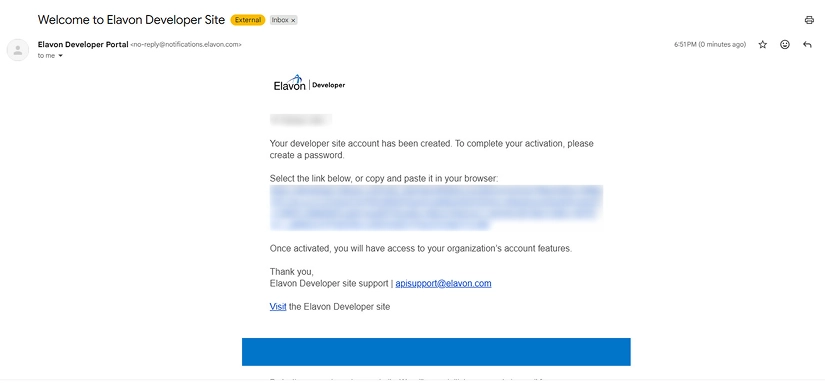
Step 3. Verify from the Email received
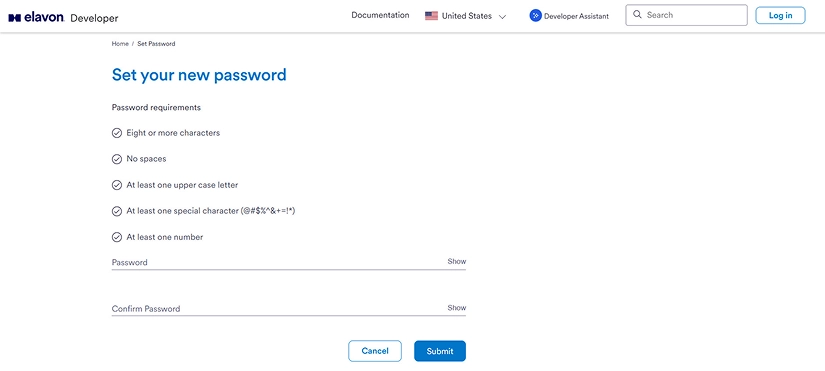
Step 4. Set the password for the Account
- Log in to your Elavon merchant account using this link
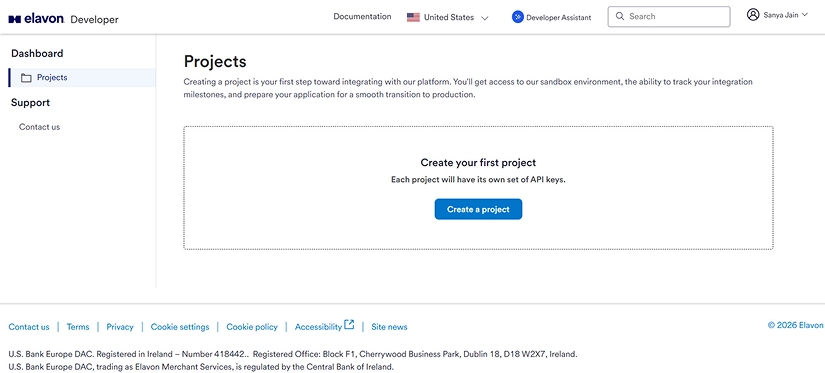
- Create a project
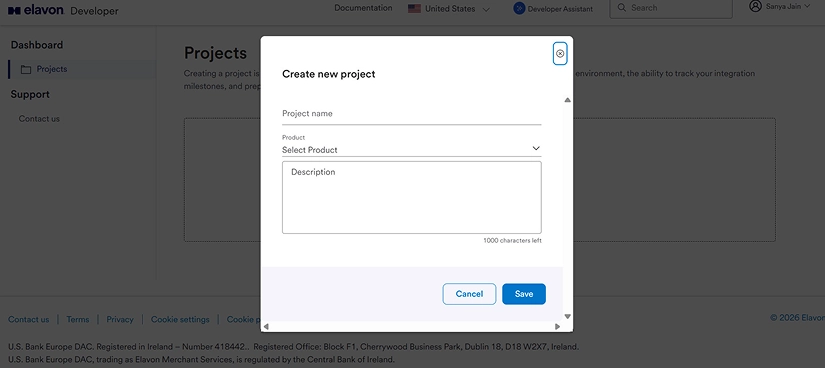
- Enter the details and save the project
- Your new project will be created!
- Further, open the Project and click on API Keys tab
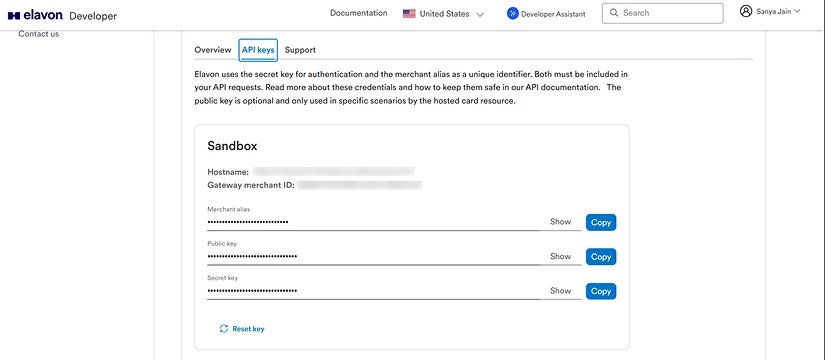
- Secret key
- Merchant alias
- Public key
Create your Elavon gateway record in Salesforce
- Click on the App Launcher (9-dot icon)
- Search for ChargeOn.
- Click to open the ChargeOn application.
- From the ChargeOn app navigation bar, open the Payment Gateway tab.
- Click New to create a new Payment Gateway record.

- In Select Gateway, choose Elavon from the dropdown.
- Under Select Payment Method, move the following options from Available to Selected:
- Instant
- Schedule
- Recurring
These define how payments can be processed using this gateway.
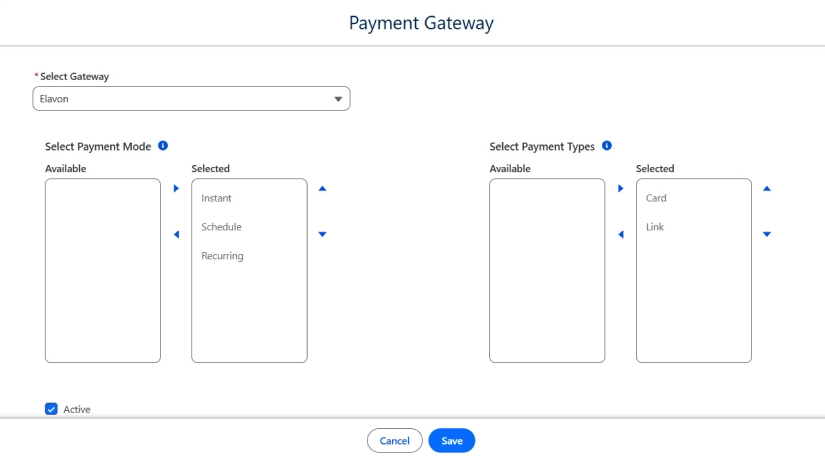
- Under Select Payment Types, move the following options from Available to Selected
- Card
- Link
This enables payment links for Elavon.
- Fill in the required fields as follows:
- Payment Gateway Name
- Gateway
- Default Currency: USD
- The supported currencies
- Base URI: https://uat.api.converge.eu.elavonaws.com
- Minimum Charge: $1
- Use the apitest URL for sandbox/testing.
- Replace with the production URL when configuring live payments.
Step 7: Add gateway credentials
- In the Gateway Credentials section, add the following key-value pairs:
- Credential
- Key: Public key
- Value: {yourPublic key}
- Key: Merchant alias
- Value: {your Merchant alias}
- Key: Secret key
- Value: {your Secret key}
- Credential
Step 8: Review all details carefully and click Save
The Elavon Gateway is now configured and ready for use in ChargeOn.
Test your transactions in a Salesforce Sandbox
You can test your integration in multiple ways.
We are sharing one of the simplest ways to test the same using Elavon payments.
Elavon Payment allows you to make payments using a payment link via Credit card or using a bank account number.
- Selects the payment gateway to start the payment process.
- Once the gateway is chosen, select Card, Link Payment as the payment method.
- Choose the payment mode: instant, schedule, or recurring payment
- Enter basic personal details, such as Card Details, Payee Name, Email, and Payable Amount
- Click the Charge button to submit the payment
The system securely auto deducts the amount from the card details entered. Additionally sends payment URLs to the customer's email when selecting the payment Link. The customer securely processes the payment using a credit card.
A confirmation email is automatically sent to the customer, and the payment details are saved in Salesforce for tracking and records.
Prepare to go live in production
After the testing is completed in the Sandbox, the configuration can be migrated to the production environment:
- Go to the live Elavon environment and get the credentials with the same steps we
mentioned above. For example:
- Credential
- Key: key
- Value: {your key}
- Key: Recurring API URL
- Value: {your Recurring API URL}
- Key: Version
- Value: {Latest Version}
- Credential
- Add these credentials to ChargeOn, and now your data is ready for the live environment
Post deployment, perform controlled production testing to validate end-to-end payment processing before enabling the solution for live users.
With this, your Elavon integration with Salesforce is successful using ChargeOn.

Refer to our Salesforce Multi-Gateway Setup Guide for integrating multiple payment gateways and optimizing your Salesforce payment integration. This eliminates the dependency on a single vendor.
Apart from Elavon, ChargeOn supports other widely used global payment gateways, including: